
|
An entire online book on, you guessed it, lettering, written by the most knowledgeable and talented artist himself. Wow! Click on each chapter's summary to read the whole page. Utterly fascinating stuff. 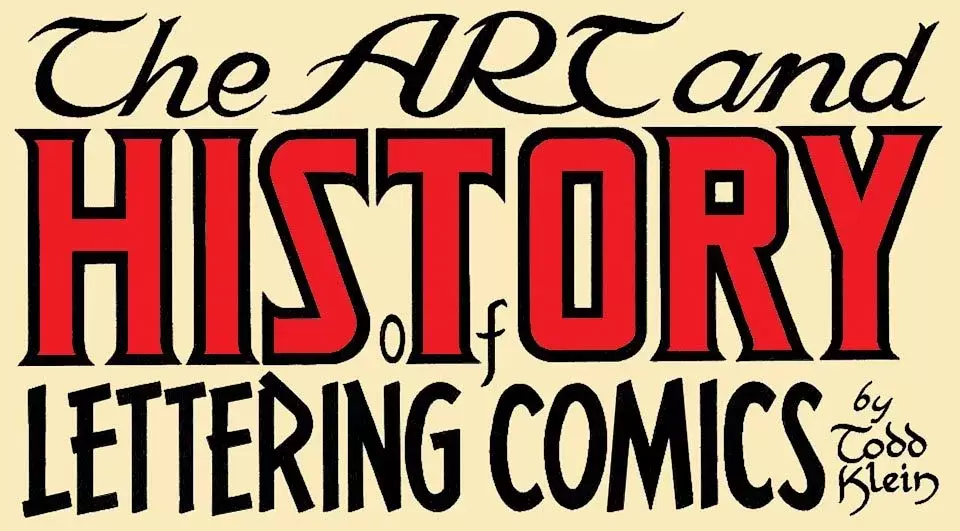
0 Comments
Artistically speaking, would the mid to late '90s be as significant as they were without Dave McKean? Would our favourite Doom Metal or Emo albums look the same without his artful collages and graphical explorations (Duncan Fegredo probably should also receive some extra credit here)? Here's a long, in-depth, retrospective interview with McKean that ran recently in The Comics Journal. On a side note, saving for future Christmases: Thalamus, a two-volume hardcover retrospective published by Dark Horse in late 2023 that will only cost you a meagre $149.99. 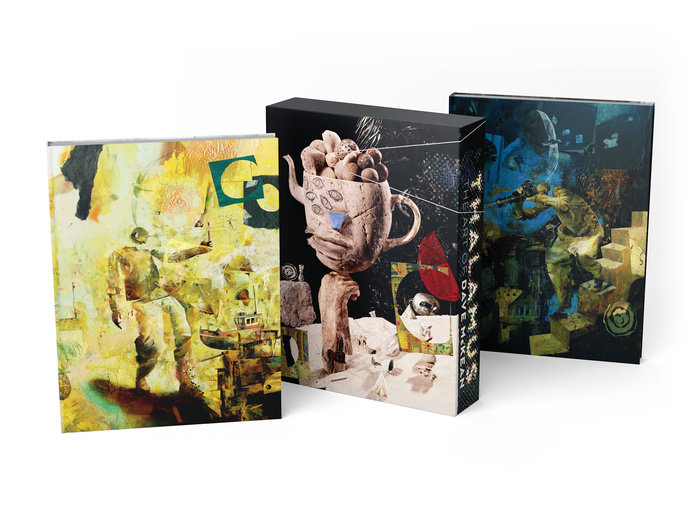
Let's tak about Marvel Comics, the be-all, end-all of mainstream superhero stories. My relationship with Marvel has been a wild ride. I was fully immersed in their superhero universe growing up, practically living and breathing alongside my favorite characters. I can still vividly recall the sheer joy of returning from vacations to reunite with my beloved stack of '80s X-Men and Avengers comics. The excitement was palpable, and I even longed for them while away. However, my enthusiasm took a hit during my stint at a Comic Book Store in the early '90s, where the scene was dominated by flashy gimmicks like Special Holographic Foil 3D Blood covers. Then came Image Comics, shaking up the industry forever.
The following decades were a mixed bag. While some artists and writers attempted to usher in a new era for superheroes, others got lost in the haze of nostalgia. In the 2010s, I drifted away from Marvel Comics when they stopped making sense, only to rediscover my passion about a decade ago. Recently, I stumbled upon a delightful list compiled by Anne Reads Comics! nestled between two hate posts on X. It's a goldmine of Marvel wonders waiting to be explored, and I'm itching to dive into these unexplored corners of "the House of Ideas" anytime soon.
"Cartoonist Kayfabe" is the brainchild of two hyperactive comic creators, Ed Piskor (X-Men Grand Design, Hip Hop Family Tree) and Jim Rugg (Afrodisiac, Mtsyry: Octobriana 1976) and it's one of the most interesting podcast/video dissection of roughly five decades of comic book history (from the 70s to today, with a strong emphasis on the 90s, "the dark ages" of mainstream comics when every superhero had turned into a many-toothed, pouch-wearing demented clone from an alternate future). I've discovered countless new fascinating creators thanks to those two guys, and if you're not well-versed into the history of the medium, their YouTube channel will be your best entry point into the art form. 'Kayfabe' has almost become a synonym for interesting comics these days (many comic book shops have a Kayfabe corner) and it seems they're on the verge of becoming an actual brand as their Spreadshirt shop indicates. Lots of interesting posts can be found on their Instagram account too, like this one below which will give you an idea of how influential they've become! (Note: I just learned something I didn't know while researching where the word 'Kayfabe' came from, it's used in professional wrestling to indicate the necessary suspension of disbelief in non-wrestling related events such as feuds or gimmicks.) 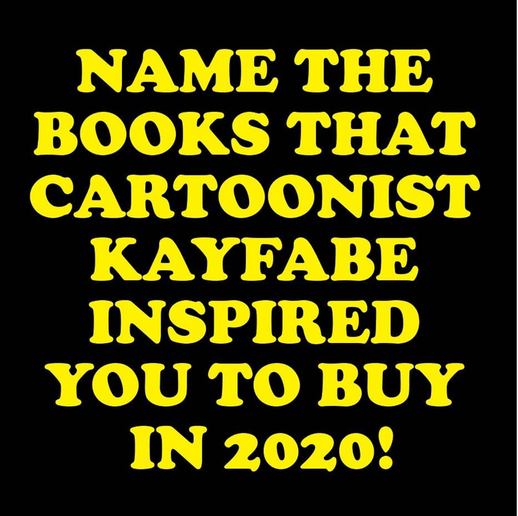 Here's their introduction video if you want to learn where they're coming from. 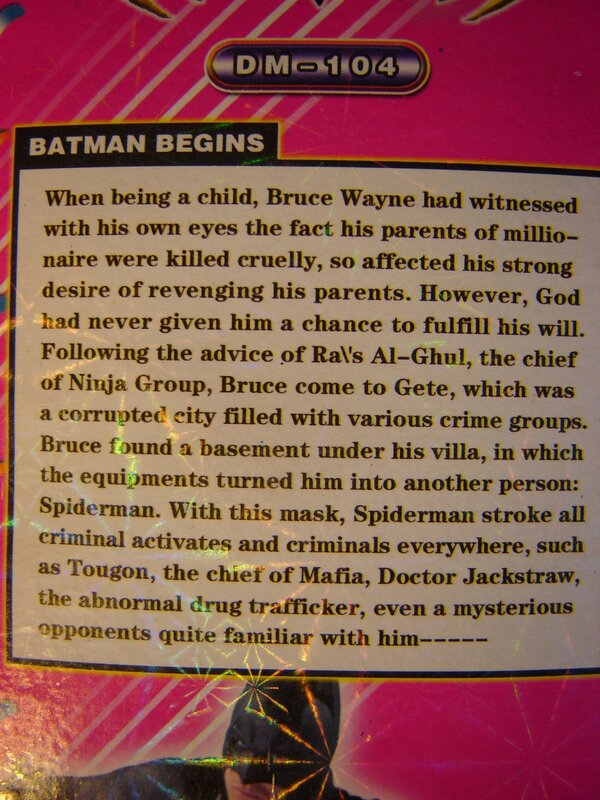 Makes more sense than any of that Christopher Nolan "imaginary story", right?
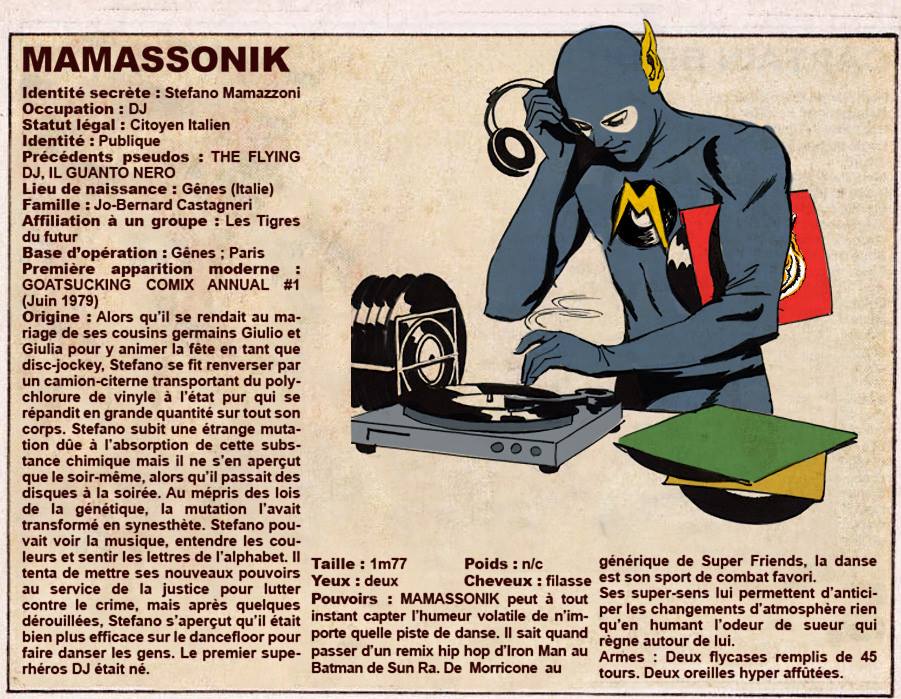 Just found this old flyer I wrote once for my friend DJ Mamazzoni, in the style of the old Marvel Universe handbooks. The artwork is all Mamazzoni's and I think it rules!
|
MAXIMILIEN
|
 RSS Feed